Rental Agreement for Shops: Guide for Tea Shops & Chai Stalls
Starting a tea shop or a small chai stall is often driven by passion, but sustaining it depends on smart decisions. One of the most critical — and commonly overlooked — steps is signing a proper rental agreement for shops. Whether you are opening a roadside chai stall or a compact tea café, a well-drafted agreement protects your money, effort, and peace of mind.
Many first-time tea entrepreneurs rely on verbal promises, only to face sudden rent hikes or eviction notices. This guide explains everything you need to know about creating a strong rental agreement for shops, especially for tea shops in India.
Why a rental agreement is crucial for tea shops
A tea business works on thin margins and daily cash flow. Any dispute with the landlord can disrupt operations instantly. A written agreement clearly defines rent, duration, maintenance duties, and exit terms. It avoids confusion and gives you legal backing if problems arise.
If you are still in the planning stage, reading how to start a tea shop will help you understand why location and rent decisions directly affect profitability.
Agreement format for shop rent: what it should include
A proper agreement format for shop rent should be simple, clear, and specific. Avoid vague language. These are the must-have sections:
- Names of parties – Full details of landlord and tenant
- Shop description – Exact address and size of the shop
- Lease duration – Usually 11 months or 3–5 years
- Monthly rent & security deposit – Amount, due date, and payment mode
- Rent escalation clause – Annual increase percentage
- Permitted use – Clearly mention “tea shop/food and beverage service”
- Maintenance responsibilities – Electricity, water, repairs
- Termination clause – Notice period for both parties
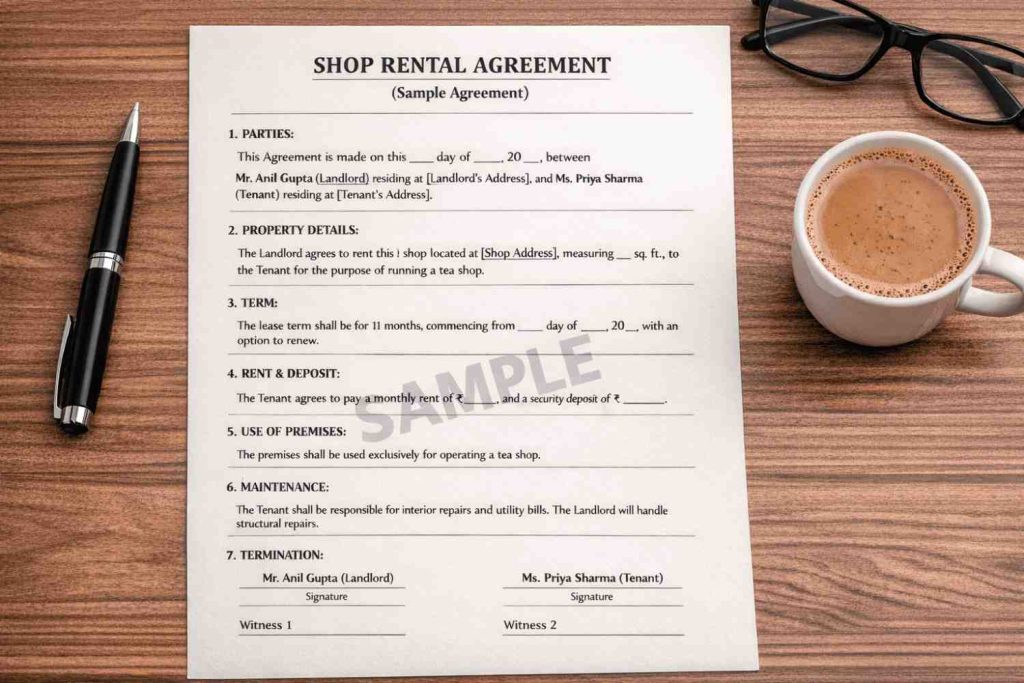
A clear format prevents misunderstandings and protects your chai business investment.
Simple commercial rent agreement vs lease deed
Many small tea shops begin with a simple commercial rent agreement, usually for 11 months. This option is affordable and flexible, especially for new entrepreneurs testing a location.
A lease deed, on the other hand, is a long-term legal document registered with the government. It is ideal if you are setting up a branded tea café or investing heavily in interiors. Though registration costs more, it offers stronger legal protection and stability.
If your goal is long-term growth, branding insights from tea branding will help you decide whether a short agreement or a lease deed suits your vision.
Understanding the four types of leases
Knowing the four types of lease helps you choose the right structure for your tea shop:
- Gross lease – Rent includes maintenance and property charges
- Net lease – Tenant pays utilities and maintenance separately
- Modified gross lease – Costs are shared between landlord and tenant
- Fixed-term lease deed – Long-term registered agreement with fixed conditions
For most small chai stalls, a modified gross or simple gross lease works best.
Legal and practical tips before signing
Before signing any rental agreement for a shop, keep these practical tips in mind:
- Ensure the landlord has legal ownership documents
- Check if food business activity is allowed in the premises
- Clarify signage permissions for your tea shop name
- Confirm working hours and water availability
- Ask about future redevelopment plans
These small checks can save you from big disruptions later.
Documents required for a tea shop rent agreement
Typically, you will need:
- ID proof of both parties
- Address proof
- Passport-size photos
- Shop ownership documents
- Two witnesses
If you plan to run a food business, ensure compliance with local rules. Official guidelines and lease templates from Startup India are useful references for small entrepreneurs.
How rent decisions affect chai business profit
Rent is one of the largest fixed expenses in a tea shop. Overpaying can destroy margins, even if sales are good. Understanding your numbers using insights from chai business profit and how small chai stalls make big profits will help you negotiate rent confidently.
A smart agreement keeps your daily operations smooth and supports long-term sustainability. Pair it with strong routines from daily chai management tips to stay consistently profitable.
Final thoughts
A tea shop runs on warmth, trust, and consistency — but paperwork needs clarity and caution. A well-written rental agreement for shops is not a formality; it is a foundation. Spend time understanding clauses, choose the right lease type, and never rush into signing.
When your legal base is strong, you can focus on what truly matters: serving great chai and building a loyal customer base.